Loading…
Trachea
Spotter answer: T.S. of trachea
Clear field
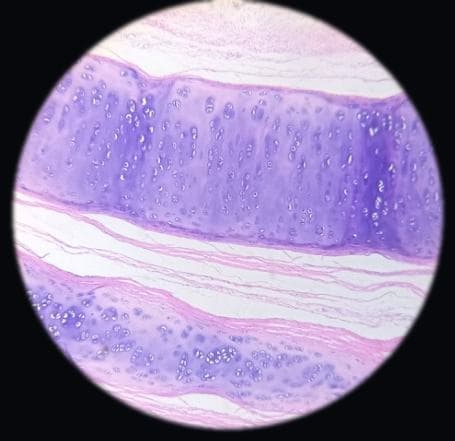
Trachea with hyaline cartilage and connective tissue at medium power. Adjust the focus1.0×
- 1Hyaline cartilage — Contains chondrocytes in lacunae within a basophilic matrix.
- 2Connective tissue — Fibrous tissue surrounding the cartilage.
TracheaIllustration, not a specimen
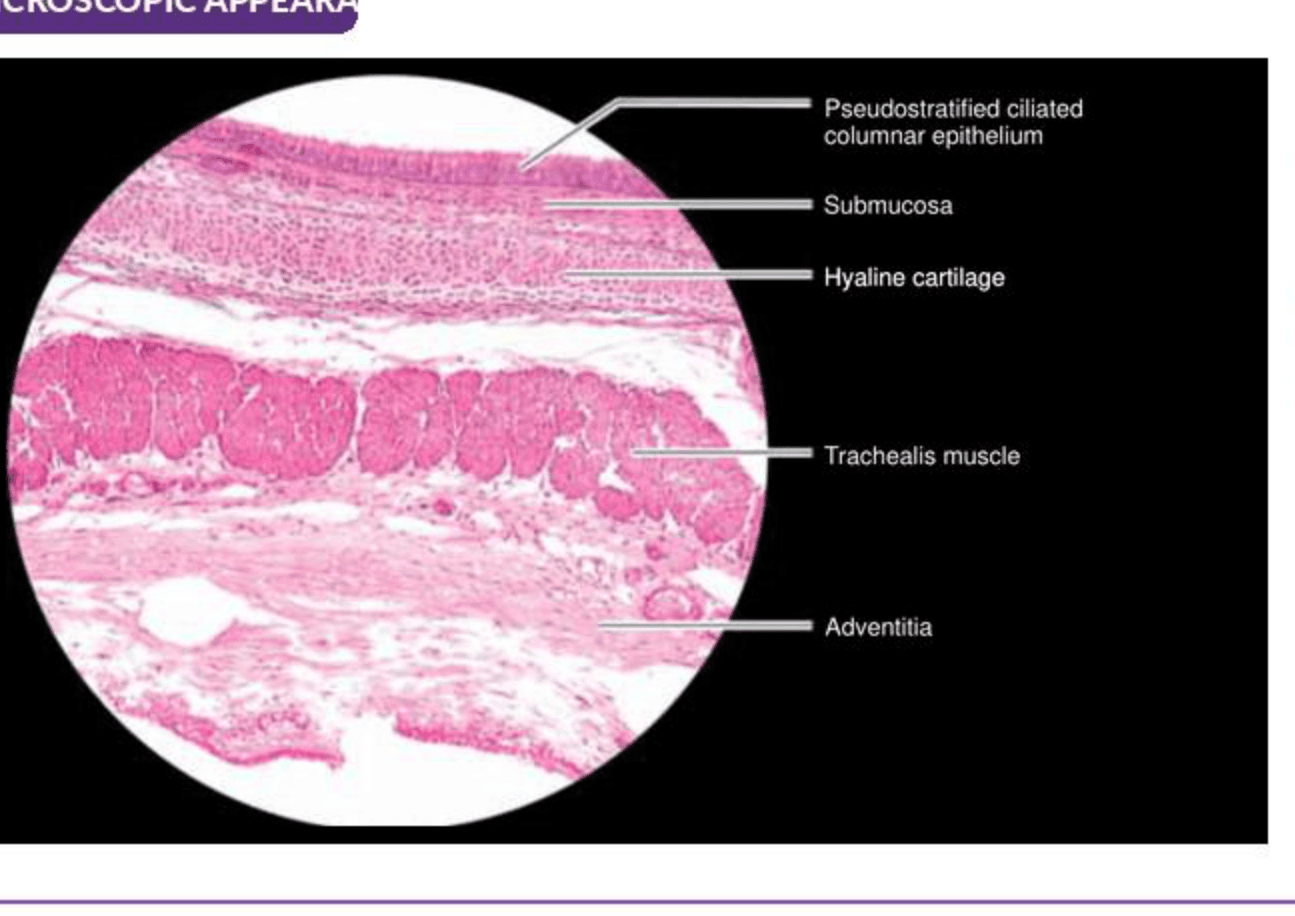
Before you name anything
Alright, take a deep breath. Let's start by looking at the overall shape of the specimen at low power. Notice how it's a tube-like structure, which is a good indication that we're in the respiratory tract. Now, focus on the lining. You'll see the pseudostratified ciliated columnar epithelium with goblet cells, which is characteristic of the trachea. This is your first clue. The mistake students often make is jumping straight to high power and getting lost in the details. Don't do that. Instead, look for the thick basement membrane and the submucosal seromucous glands. These are key features. Finally, spot the C-shaped hyaline cartilage. This confirms you're looking at the trachea. Remember, the combination of respiratory epithelium, submucosal glands, and hyaline cartilage is unique. Keep calm and focus on these features, and you'll do just fine.
Sign in free to open the rest of this slide
The identification ladder, the marks-earning features, the look-alikes, the record-book diagram and the five viva questions are waiting. Free to start, no payment.
Sign in free