Loading…
Bone — longitudinal section
Spotter answer: L.S. of bone, poorly resolved
Poor field
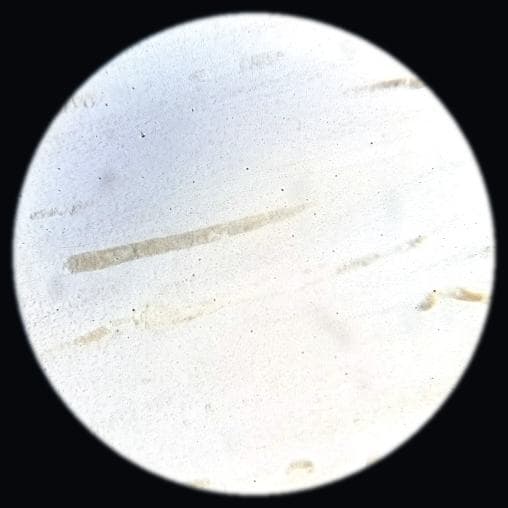
Longitudinal section of bone at low power, poorly resolved. Adjust the focus1.0×
This field is too washed out to identify from, so we have not labelled it and it never appears in a spotter. Learn the features below, then look at a good slide in the lab.
Before you name anything
Alright, let's take a deep breath. This slide is a bit tricky because it's not very clear, but don't worry. Start by looking at the overall shape. At low power, you should see a general pattern of lines or bands. These are the lamellae, and they tell you that you're looking at a bone section. Now, even if you can't see them clearly here, remember that Haversian canals run along the length of the bone, and Volkmann canals cross them. The mistake students often make is jumping to high power and getting lost in the details. Stay at low power first and identify the overall pattern. Once you have that, you can narrow down the specific features. Remember, it's about recognising the architecture before the details. This approach will help you in both your spotter and viva. Keep calm and focus on the basics.
Work it out, one rung at a time
Answer each question in your head first. Then open it.
- 1
low-power architecture
What is the overall pattern?
- 2
epithelium or covering
Is there a covering layer?
- 3
the signature feature
What runs along the length?
- 4
confirm and exclude the look-alike
What confirms it's bone?
Viva voce
1 of 5 · 0 answeredSay your answer out loud before you open it. That is the exam skill.
What are Haversian canals?