Loading…
Large intestine (colon)
Spotter answer: T.S. of colon showing crypts.
Clear field
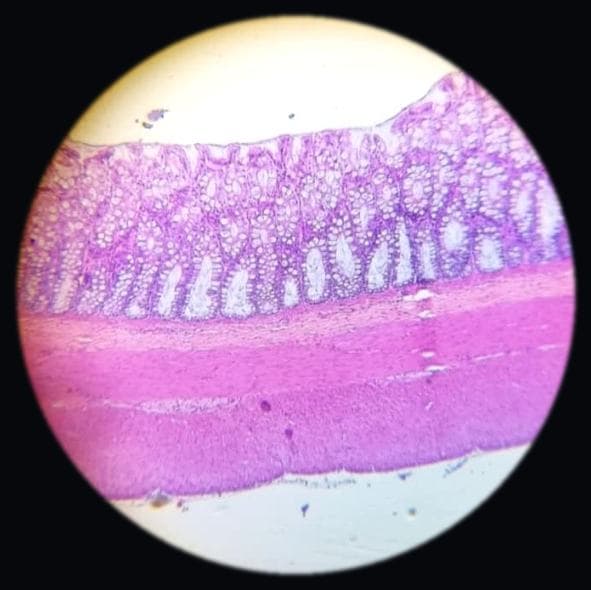
Colon section at medium power showing crypts and goblet cells. Adjust the focus1.0×
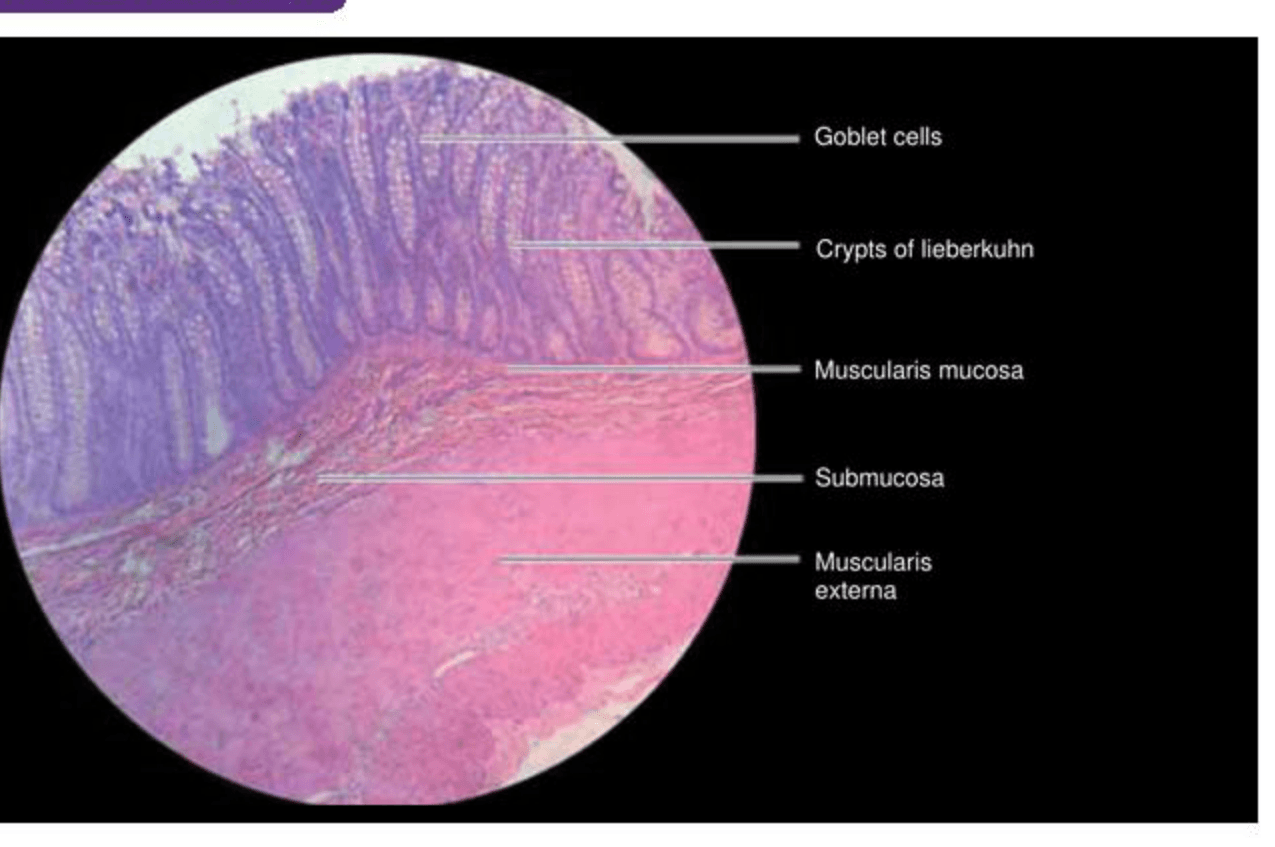
- 1Goblet cells — Abundant in the crypts, secreting mucus.
- 2Crypts of Lieberkühn — Straight tubular structures in the mucosa.
- 3Muscularis externa — Thick layer responsible for peristalsis.
ColonIllustration, not a specimen
Before you name anything
Alright, take a deep breath. Let's start by looking at the overall structure at low power. You want to see if the surface is flat or folded. Here, you have a flat mucosal surface, which is a key indicator of the large intestine. Now, look for the straight tubular crypts. These are packed with goblet cells, which are responsible for mucus production. Students often mistake this for the small intestine, but remember, the large intestine lacks villi. Focus on the abundance of goblet cells and the thickness of the muscularis externa. This is your signature feature here. Avoid jumping straight to high power and getting lost in cellular details. Start broad, then narrow down. You've got this.
Sign in free to open the rest of this slide
The identification ladder, the marks-earning features, the look-alikes, the record-book diagram and the five viva questions are waiting. Free to start, no payment.
Sign in free