Loading…
Mucous salivary gland
Spotter answer: Mucous salivary gland section
Workable field
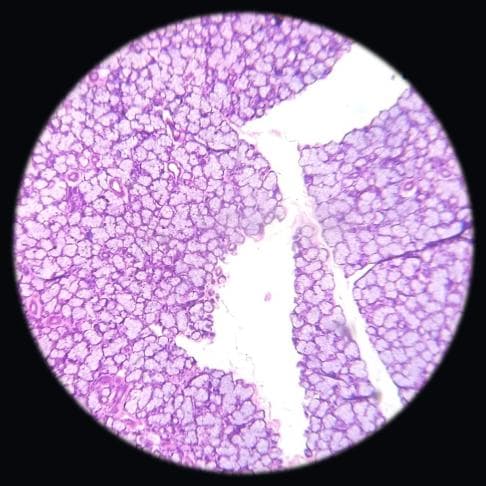
Medium power showing mucous acini with pale cytoplasm. Adjust the focus1.0×
- 1Mucous acini — Pale cytoplasm with flattened nuclei.
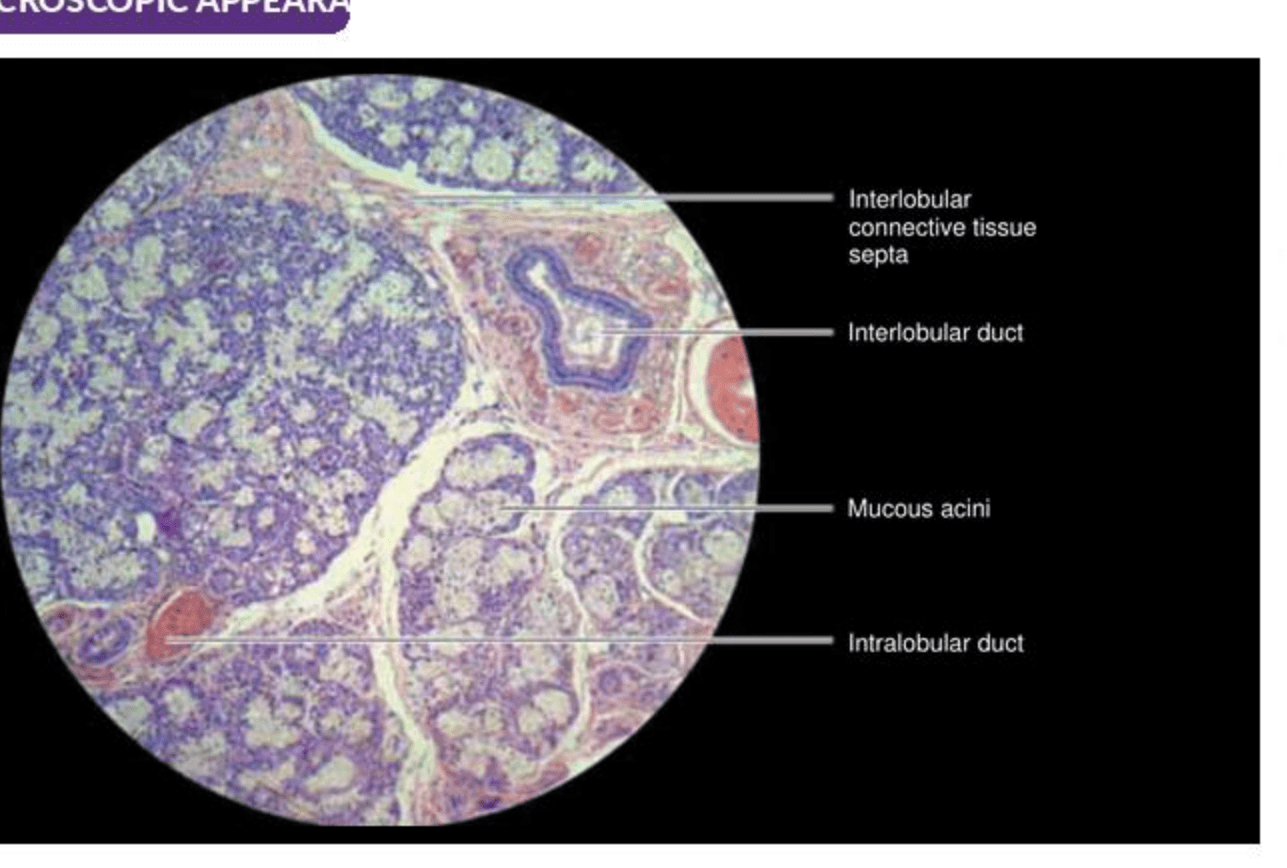
Mucous salivary glandIllustration, not a specimen
Before you name anything
Alright, let's take a deep breath and approach this calmly. Start by lowering the power and observing the overall architecture. You'll notice clusters of cells, which is typical for a gland. Now, look closely at the acini. The key feature here is the pale, foamy cytoplasm with flattened basal nuclei, indicating mucous acini. This is your main clue. Students often rush to identify serous demilunes, but these are not always present or clear. Focus on recognising the mucous acini first. Once you have that, you're on solid ground. Remember, it's about identifying the predominant feature, not every single detail. Keep your focus on the big picture, and you'll do just fine.
Sign in free to open the rest of this slide
The identification ladder, the marks-earning features, the look-alikes, the record-book diagram and the five viva questions are waiting. Free to start, no payment.
Sign in free