Loading…
Serous salivary gland
Spotter answer: Serous salivary gland section.
Workable field
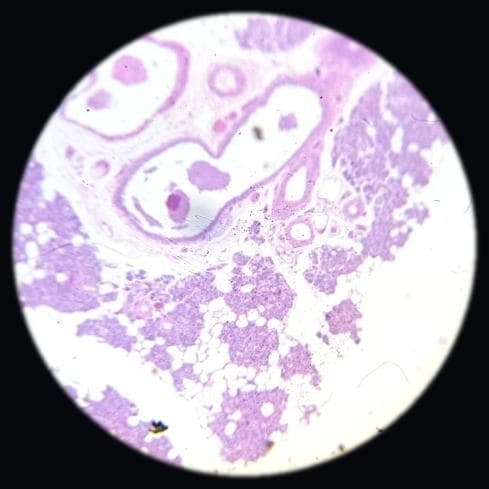
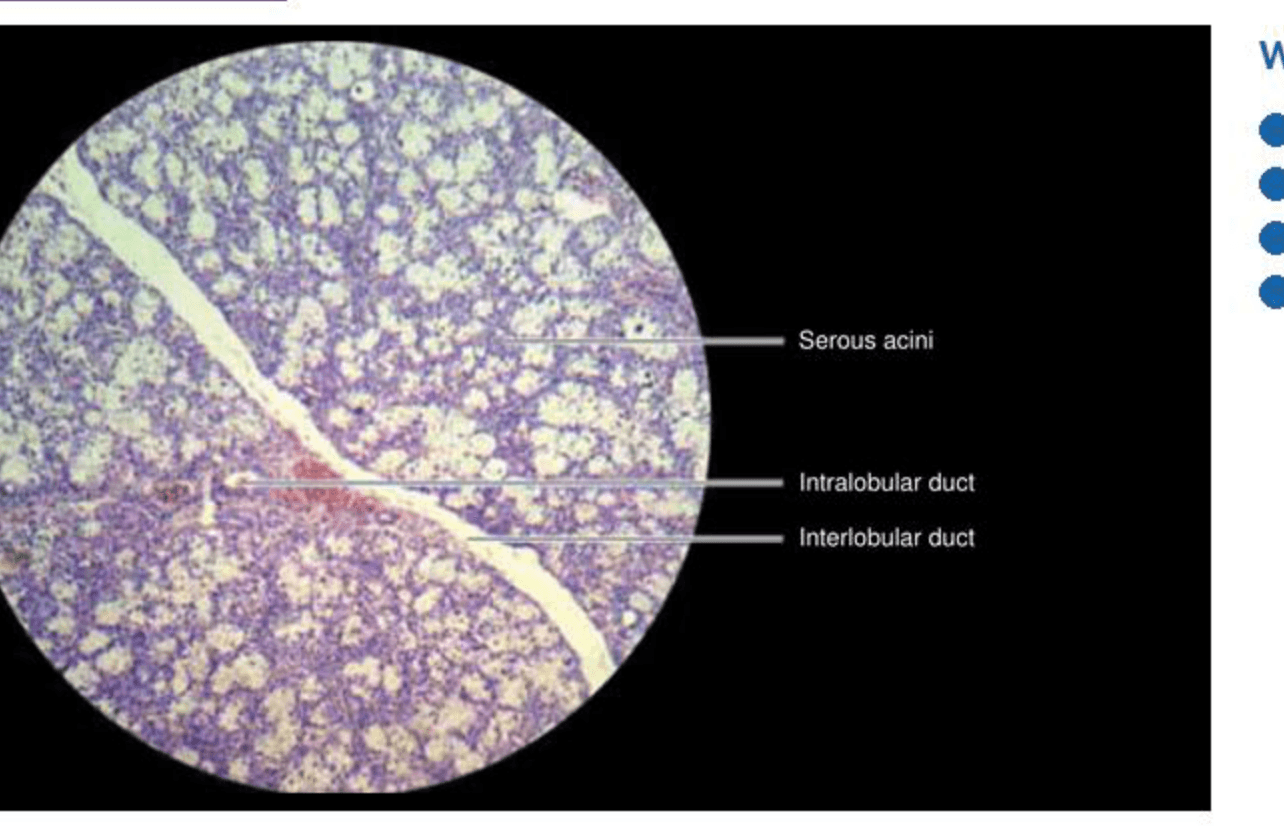
Medium power view showing serous acini and ducts. Adjust the focus1.0×
- 1Duct — Prominent structure for secretion transport.
- 2Serous acini — Darker, granular cytoplasm characteristic of serous cells.
Serous salivary glandIllustration, not a specimen
Before you name anything
Let's start by taking a deep breath and looking at the slide on low power. Notice the overall architecture; it's a collection of small, densely packed units. These are your serous acini. Now, focus on the texture and colour. The acini should appear darker and granular due to the serous nature of the cells. This is your key feature. A common mistake is jumping straight to high power and getting lost in the details. Instead, identify the acini first, then look for the ducts. While ducts are present in both serous and mucous glands, the darker, granular cytoplasm of the acini confirms you're looking at a serous salivary gland. Stay calm and methodical, and you'll do well.
Sign in free to open the rest of this slide
The identification ladder, the marks-earning features, the look-alikes, the record-book diagram and the five viva questions are waiting. Free to start, no payment.
Sign in free