Loading…
Thin skin
Spotter answer: Thin skin with appendages
Clear field
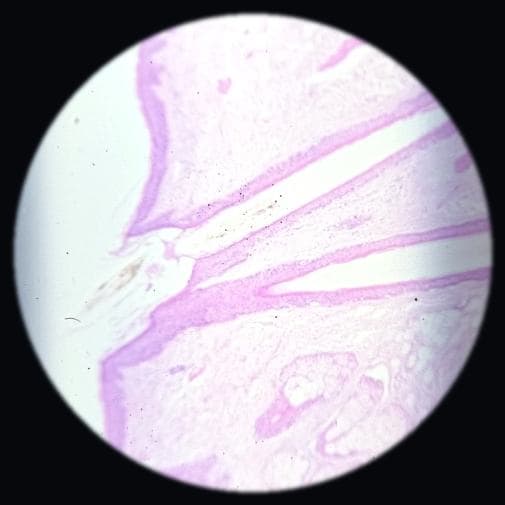
Low magnification view of skin with hair follicle. Adjust the focus1.0×
- 1Epidermis — Thin layer of keratinized stratified squamous epithelium.
- 2Hair follicle — Presence confirms thin skin.
- 3Dermis — Thicker layer containing connective tissue.
Thin skinIllustration, not a specimen
Before you name anything
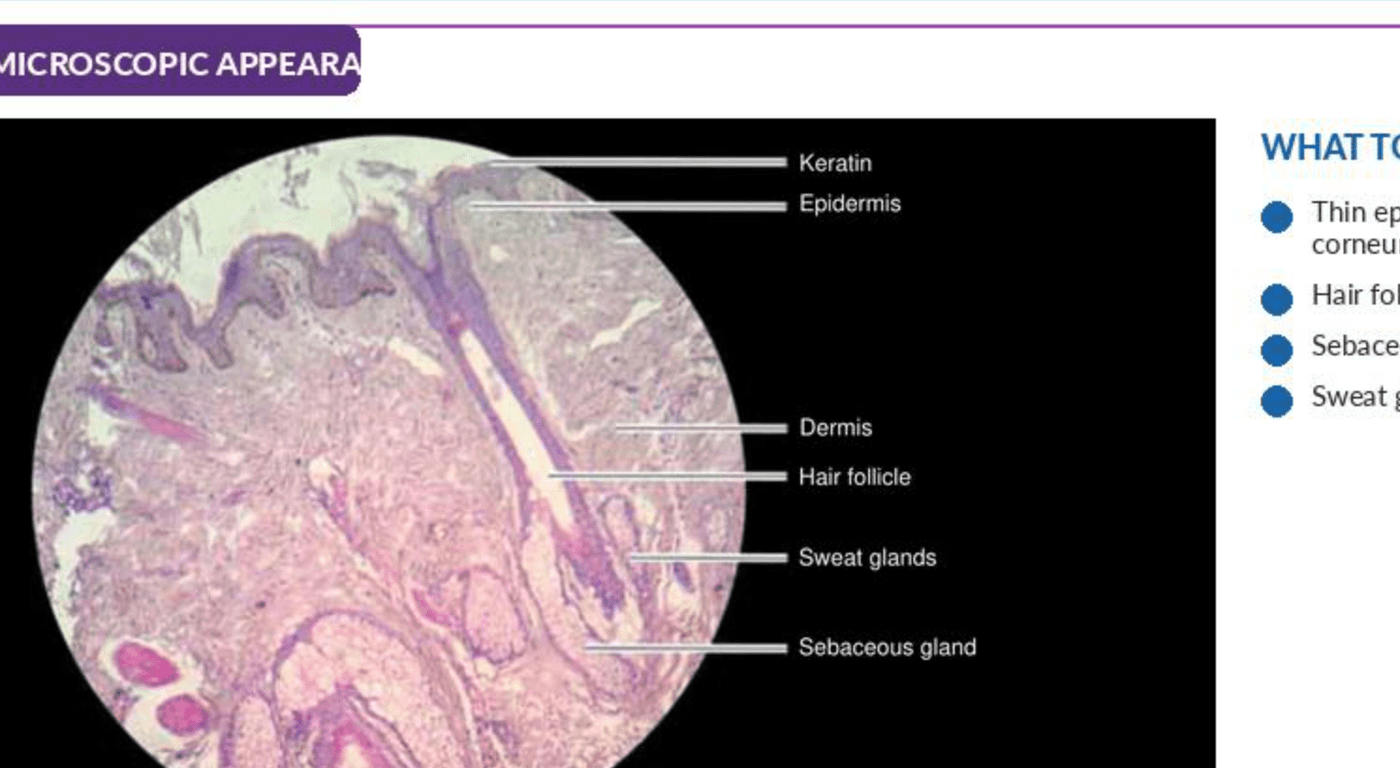
Alright, let's take a deep breath and start at low power. Look at the overall architecture first. You’ll see a thin layer on top, which is the epidermis, and below it, a thicker dermis. Notice the presence of hair follicles or glands, which are key for identifying thin skin. The mistake students often make is jumping straight to high power and getting lost in the details. Focus on the signature features first: a thinner stratum corneum and the presence of skin appendages. This will help you distinguish it from thick skin, which lacks these appendages and has a thicker stratum corneum.
Work it out, one rung at a time
Answer each question in your head first. Then open it.
- 1
low-power architecture
What is the overall structure?
- 2
epithelium or covering
What type of epithelium is present?
- 3
the signature feature
What confirms it's thin skin?
- 4
confirm and exclude the look-alike
How is it different from thick skin?
Viva voce
1 of 5 · 0 answeredSay your answer out loud before you open it. That is the exam skill.
What type of epithelium is found in thin skin?