Loading…
Thick skin
Spotter answer: Thick skin, palm or sole
Clear field
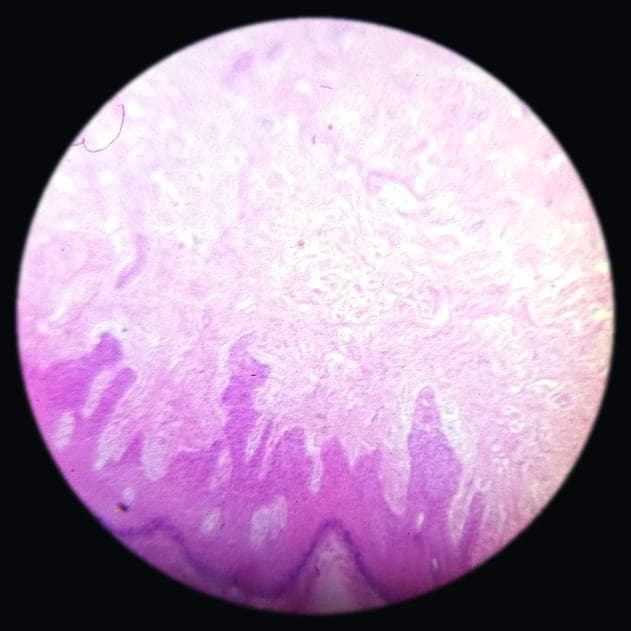
Low-to-medium power view showing thick epidermis and stratum corneum. Adjust the focus1.0×
- 1Stratum corneum — This is the thick outermost layer.
- 2Stratum basale — Deepest epidermal layer.
- 3Dermis — Connective tissue layer beneath the epidermis.
Thick skinIllustration, not a specimen
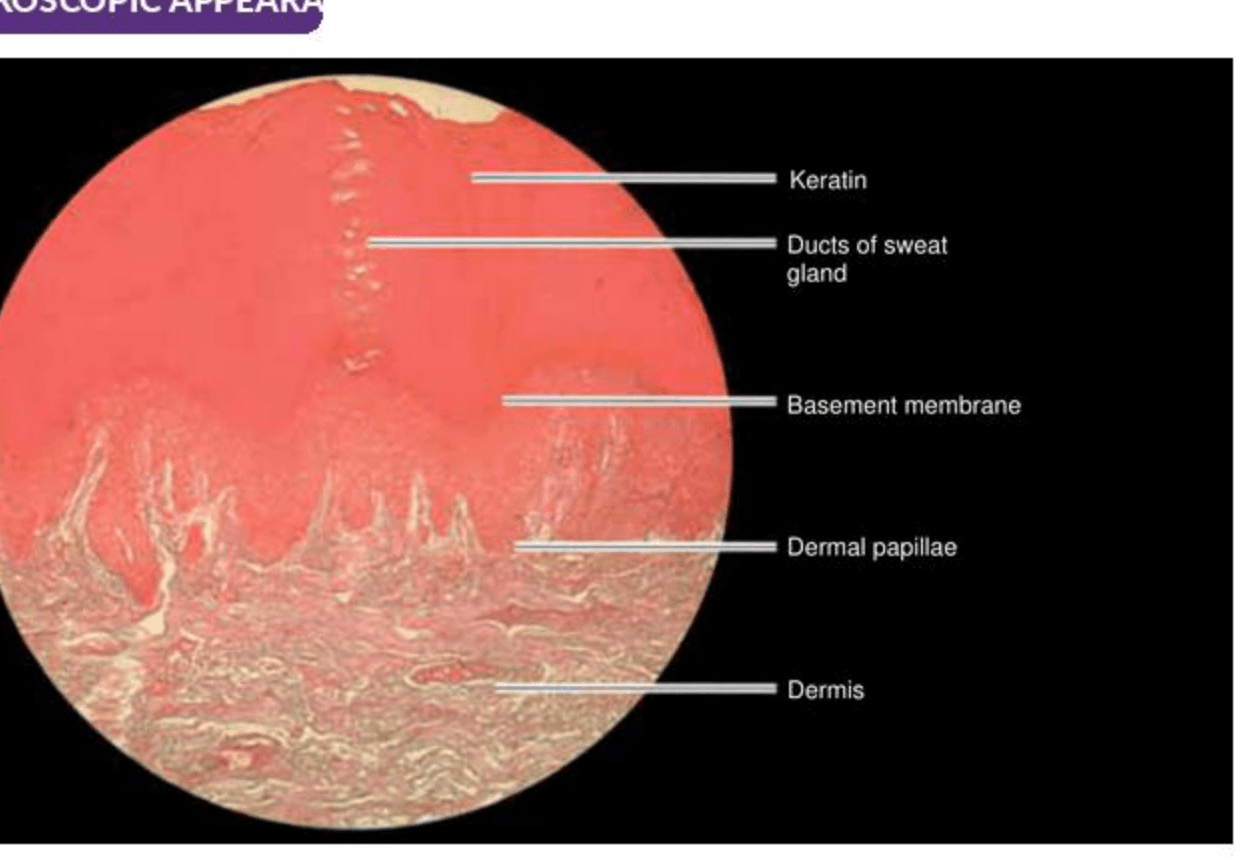
Before you name anything
Alright, take a deep breath. Let’s start by looking at the slide on low power. Notice the overall architecture. You’re looking for a very thick layer on top, which is the epidermis. This is a key feature of thick skin. Now, focus on the stratum corneum, which should be exceptionally thick. That’s your main clue. Avoid jumping straight to high power; it’s easy to get lost in the details and miss the bigger picture. The mistake students often make is trying to identify individual cells before understanding the overall structure. Remember, thick skin lacks hair follicles and sebaceous glands, but you should see eccrine sweat glands. This will help you distinguish it from thin skin. Once you’ve identified the thick stratum corneum, you’re on the right track. Keep calm and methodical, and you’ll do just fine.
Work it out, one rung at a time
Answer each question in your head first. Then open it.
- 1
low-power architecture
What is the overall shape and structure?
- 2
epithelium or covering
What type of epithelium is present?
- 3
the signature feature
What is the key identifying feature?
- 4
confirm and exclude the look-alike
What features confirm thick skin and exclude thin skin?
Viva voce
1 of 5 · 0 answeredSay your answer out loud before you open it. That is the exam skill.
What is the main function of the thick stratum corneum?