Loading…
🩺 Medicine · Part 8 revision hub
Gastroenterology and Hepatology
Everything you need to revise this Part in one place — the one‑page note for every concept, a rapid‑revision sheet, exam‑style questions that point you back to the right concept, flashcards, staged cases and viva practice.
29 concepts20 MCQs20 flashcards9 cases15 viva questions
📝 The plate wall
Every concept in this Part as a one‑page handwritten note. Open one to read it in full and zoom.
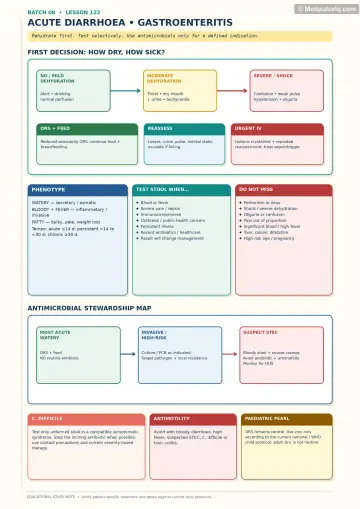
Concept 122
Diarrhoea and Acute Gastroenteritis
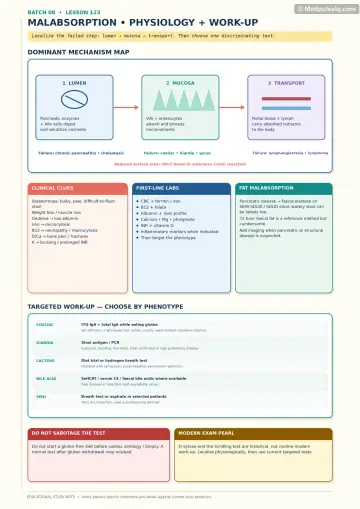
Concept 123
Malabsorption: Finding the Failed Step
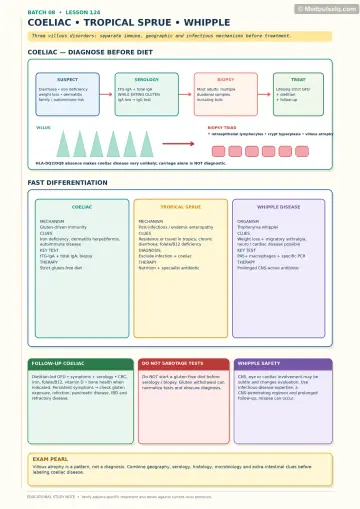
Concept 124
Coeliac Disease and Its Look-Alikes
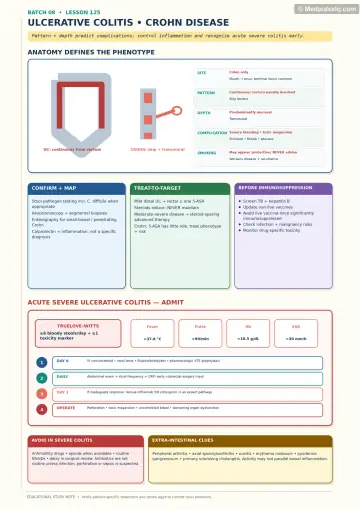
Concept 125
Ulcerative Colitis and Crohn Disease
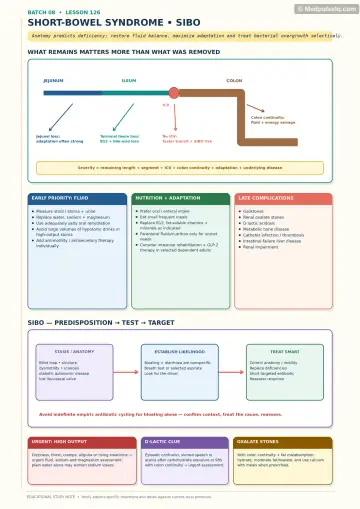
Concept 126
Short Bowel Syndrome and SIBO
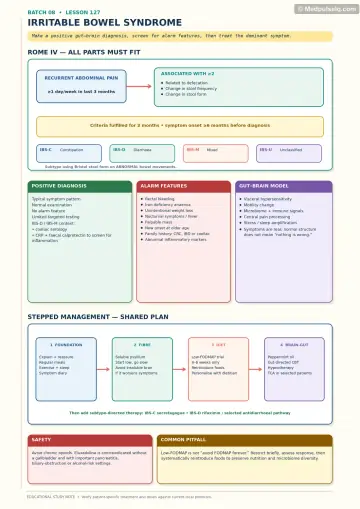
Concept 127
Irritable Bowel Syndrome
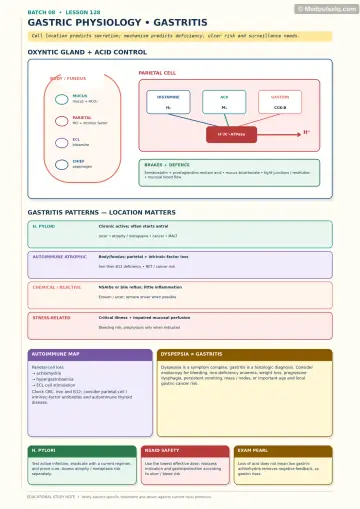
Concept 128
Gastric Physiology and Gastritis
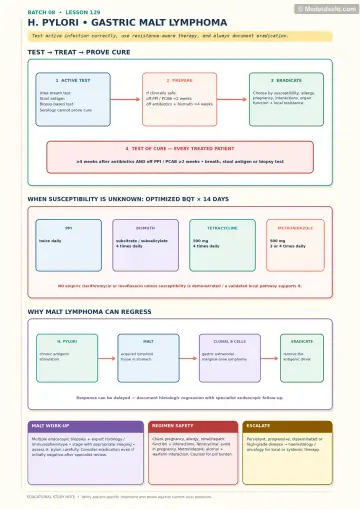
Concept 129
H. pylori and Gastric MALT Lymphoma
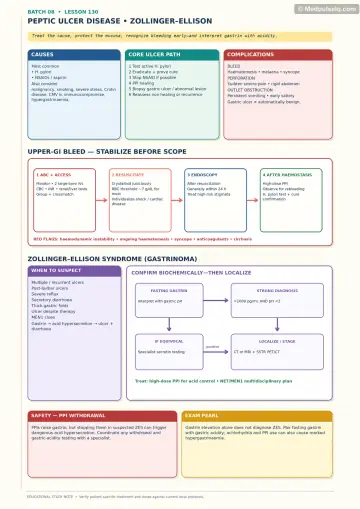
Concept 130
Peptic Ulcer Disease and Zollinger-Ellison Syndrome
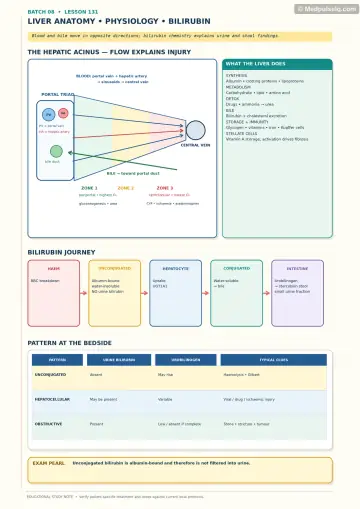
Concept 131
Bilirubin and the Jaundice Map
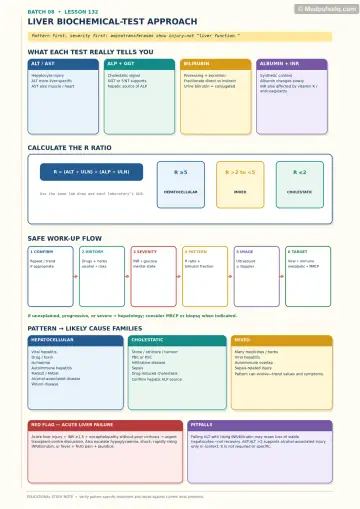
Concept 132
Reading Liver Biochemical Tests
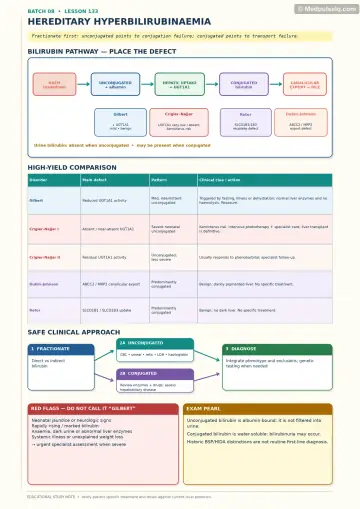
Concept 133
Hereditary Hyperbilirubinaemia
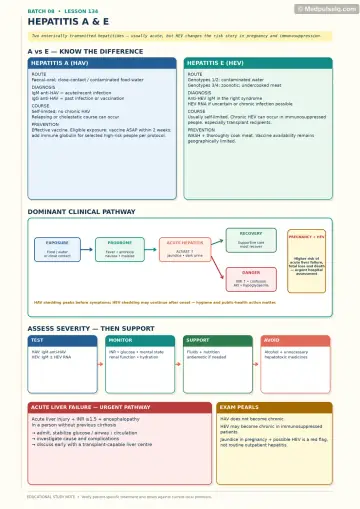
Concept 134
Hepatitis A and E
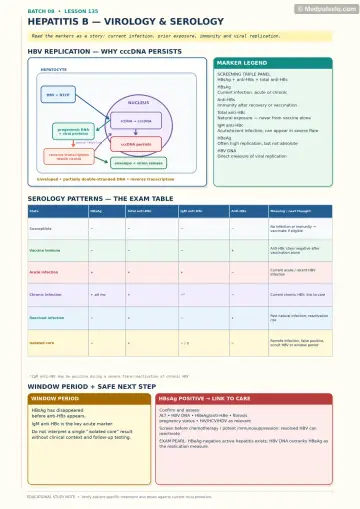
Concept 135
Hepatitis B Serology
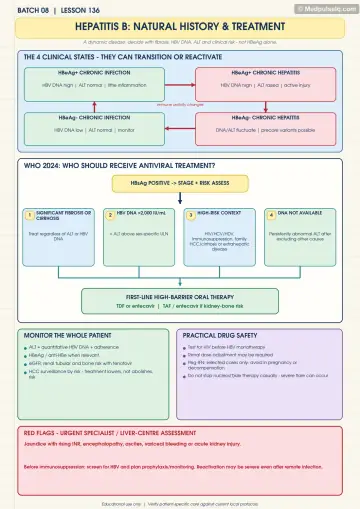
Concept 136
Hepatitis B Natural History and Treatment
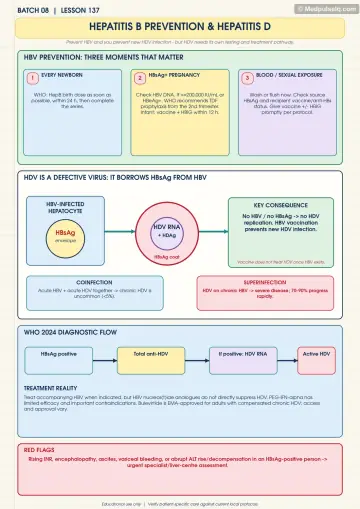
Concept 137
Hepatitis B Protection and Delta Virus
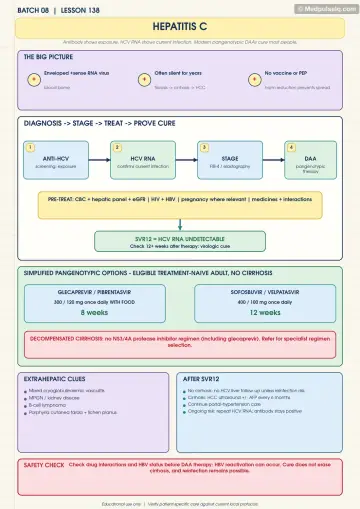
Concept 138
Hepatitis C: the curable chronic hepatitis
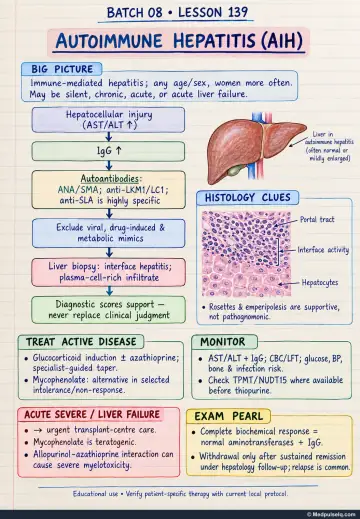
Concept 139
Autoimmune Hepatitis: friendly fire in the liver
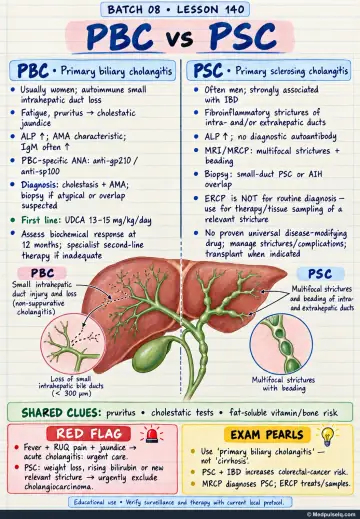
Concept 140
PBC and PSC: when bile ducts are the target
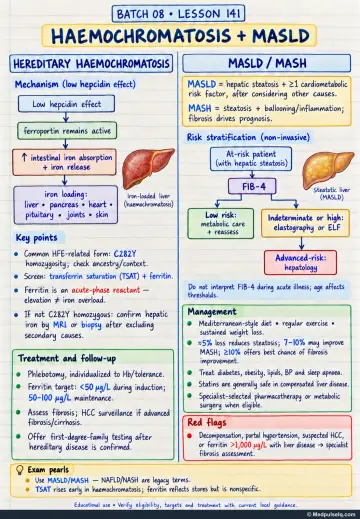
Concept 141
Iron Overload and Fatty Liver: silent storage problems
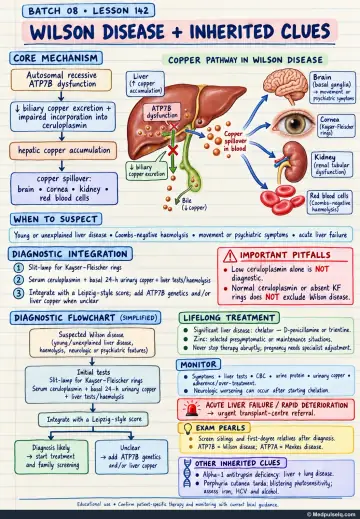
Concept 142
Wilson Disease: copper where it should not be
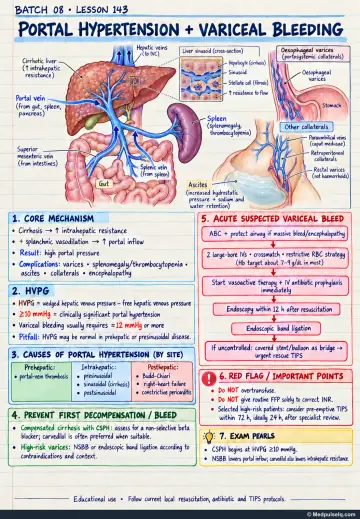
Concept 143
Portal Hypertension and Variceal Bleeding
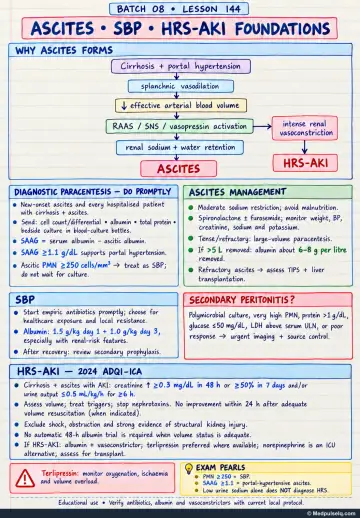
Concept 144
Ascites and Spontaneous Bacterial Peritonitis
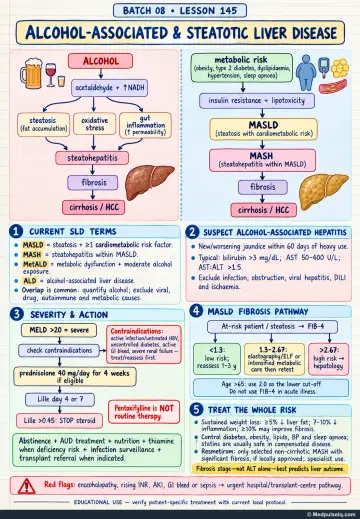
Concept 145
Alcohol-Associated Liver Disease
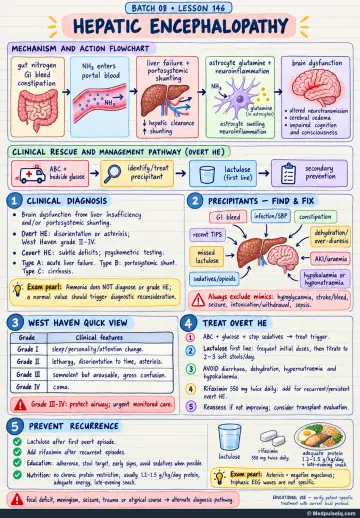
Concept 146
Hepatic Encephalopathy: the cloudy brain in cirrhosis
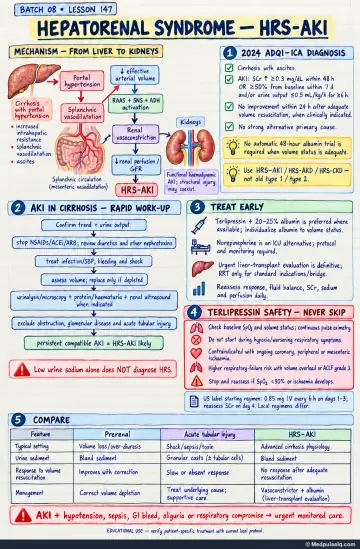
Concept 147
Hepatorenal Syndrome: kidney failure from cirrhosis physiology
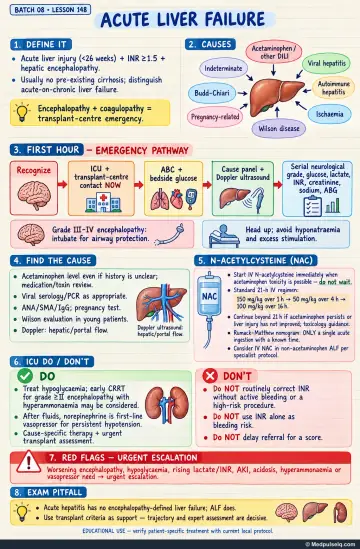
Concept 148
Acute Liver Failure: a transplant-centre emergency
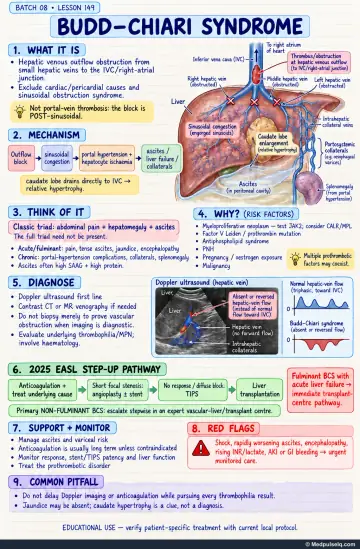
Concept 149
Budd-Chiari Syndrome: blocked liver outflow
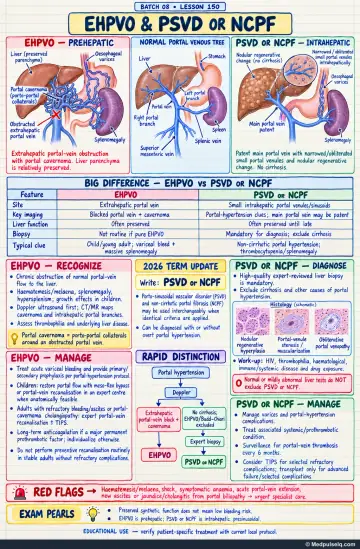
Concept 150
EHPVO and PSVD: portal pressure without classic cirrhosis
⚡ Rapid revision
The whole Part on one screen — read it the night before.
Gastroenterology rapid review
- Acute diarrhoea care starts with volume status and ORS, not automatic antibiotics.
- Bloody diarrhoea with severe cramps and little fever can be Shiga-toxin illness: avoid loperamide and usually avoid antibiotics while testing.
- Chronic diarrhoea: classify watery, fatty or inflammatory before ordering broad tests.
- Coeliac disease: test with tTG-IgA plus total IgA while eating gluten; adults usually need duodenal biopsy.
- UC is continuous mucosal colitis; Crohn disease is skip, transmural and prone to fistula or stricture.
- Exclude C. difficile and intestinal infection before escalating IBD immunosuppression.
- Acute severe UC needs admission, IV steroid, VTE prophylaxis, day-3 review and early surgical partnership.
- IBS is diagnosed positively only after alarm-feature review.
- Confirm active H. pylori with breath, stool antigen or biopsy testing; serology cannot prove cure.
- Test H. pylori cure at least 4 weeks after antibiotics and off PPI about 2 weeks when safe.
- Empiric clarithromycin triple therapy is obsolete where susceptibility is unknown.
- Gastric ulcer or abnormal gastric lesion requires appropriate biopsy and follow-up.
Hepatology rapid review
- ALT/AST are injury markers; ALP/GGT suggest cholestasis; INR/albumin reflect synthesis.
- R-ratio more than 5 is hepatocellular, less than 2 cholestatic, and 2–5 mixed.
- Falling ALT with rising INR can mean worsening liver failure.
- HEV in pregnancy can be severe; encephalopathy plus INR rise is an emergency.
- HBV serology depends on HBsAg, anti-HBc and anti-HBs; HBV DNA shows replication.
- HBV first-line oral drugs are high-barrier tenofovir-based therapy or entecavir, chosen by patient factors.
- Anti-HCV positivity proves exposure; HCV RNA proves current infection.
- DAAs replace interferon for almost all HCV; protease inhibitors are avoided in decompensated cirrhosis.
- PBC: antimitochondrial antibody clue and UDCA 13–15 mg/kg/day first-line.
- PSC: MRCP diagnoses; ERCP treats or samples relevant strictures.
- MASLD: fibrosis risk matters most; use FIB-4 then elastography/ELF if needed.
- Wilson disease is a composite diagnosis; ceruloplasmin alone is inadequate.
- Clinically significant portal hypertension begins at HVPG 10 mmHg; bleeding usually needs about 12 mmHg.
- Variceal bleed: vasoactive drug plus antibiotic now, restrictive transfusion and banding within 12 hours after stabilization.
- Ascites: diagnostic tap first; SAAG at least 1.1 g/dL supports portal hypertension.
- SBP: PMN at least 250/mm³; treat before culture result.
- More than 5 L paracentesis needs albumin replacement, commonly about 6–8 g per litre removed.
- HE: treat trigger plus lactulose to 2–3 soft stools daily; rifaximin prevents recurrence.
- Ammonia neither diagnoses nor grades HE by itself.
- HRS-AKI is diagnosed after correcting/excluding alternatives; use albumin plus vasoconstrictor and assess transplant.
- Terlipressin requires oxygenation and ischaemia monitoring.
- Pentoxifylline is not routine therapy for alcohol-associated hepatitis.
- ALF means INR at least 1.5 plus encephalopathy without prior cirrhosis; call a transplant centre early.
- NAC should not wait when acetaminophen toxicity is plausible.
- Budd-Chiari: anticoagulation, then recanalization/TIPS, then transplant if needed.
🎯 Single‑best‑answer MCQs
Pick an answer to see the explanation — and the concept to revisit if you missed it. Your answers are saved on this device.
Score 0 / 00 of 20 answered
Question 1
A patient with profuse watery diarrhoea continues to pass large-volume stool during fasting. The most likely mechanism is:
Question 2
The best initial serologic pair for suspected coeliac disease in an adult eating gluten is:
Question 3
Which feature most strongly favours Crohn disease over ulcerative colitis?
Question 4
A patient with ASUC has failed 3 days of IV corticosteroid. The best next principle is:
Question 5
Which is an alarm feature against a simple IBS diagnosis?
Question 6
The preferred empiric H. pylori regimen when susceptibility is unknown in a high-resistance setting is generally:
Question 7
Which test is inappropriate for confirming H. pylori eradication?
Question 8
An R-ratio of 7 indicates which liver-injury pattern?
Question 9
Which bilirubin disorder commonly causes benign intermittent unconjugated jaundice during fasting?
Question 10
HBsAg negative, anti-HBc negative and anti-HBs positive most strongly indicates:
Question 11
The test that confirms current hepatitis C infection after a reactive antibody test is:
Question 12
Which DAA class must not be used in decompensated cirrhosis?
Question 13
First-line disease-modifying therapy for PBC is:
Question 14
The preferred initial imaging for suspected PSC is:
Question 15
An ascitic PMN count of 310/mm³ in cirrhosis means:
Question 16
Which statement about acute variceal bleeding is correct?
Question 17
The stool target during lactulose therapy for overt HE is:
Question 18
Which statement reflects current HRS-AKI consensus?
Question 19
Which therapy is no longer recommended routinely for alcohol-associated hepatitis?
Question 20
Acute liver failure requires coagulopathy plus:
🃏 Flashcards
Say the answer out loud before you flip. Shuffle once you know the order.
Card 1 of 20
🩺 Staged clinical cases
Read the presentation, decide what is going on and what you would do — then reveal the reasoning.
Case 1 — Bloody diarrhoea after a shared meal
Stage A: A 22-year-old develops severe cramps and bloody diarrhoea 2 days after a shared meal. Temperature is 37.4°C and creatinine is normal.
Linked concepts: 122. Diarrhoea and Acute Gastroenteritis
Case 2 — Iron deficiency without diarrhoea
Stage A: A 29-year-old woman has recurrent iron-deficiency anaemia and bloating. She has already reduced bread intake.
Case 3 — Day 3 of acute severe ulcerative colitis
Stage A: A patient has 10 bloody stools/day, tachycardia, Hb 9.8 g/dL and persistently high CRP after 3 days of IV corticosteroid.
Linked concepts: 125. Ulcerative Colitis and Crohn Disease
Case 4 — Recurrent ulcer after repeated triple therapy
Stage A: A man treated twice with PPI-amoxicillin-clarithromycin has another duodenal ulcer; no test of cure was done.
Case 5 — Confusing HBV serology before rituximab
Stage A: HBsAg is negative, total anti-HBc positive and anti-HBs negative before B-cell-depleting therapy.
Linked concepts: 135. Hepatitis B Serology, 136. Hepatitis B Natural History and Treatment
Case 6 — Haematemesis in cirrhosis
Stage A: A patient with known cirrhosis arrives hypotensive after large haematemesis; Hb is 6.8 g/dL.
Linked concepts: 143. Portal Hypertension and Variceal Bleeding
Case 7 — Fever, AKI and ascites
Stage A: A cirrhotic patient with ascites becomes confused; creatinine rises by 0.5 mg/dL. The abdomen is not tender.
Case 8 — Young adult with tremor and hepatitis
Stage A: A 20-year-old has tremor, behavioural change, Coombs-negative haemolysis and jaundice; ceruloplasmin is low-normal.
Linked concepts: 142. Wilson Disease: copper where it should not be
Case 9 — Jaundice and confusion after febrile illness
Stage A: A previously healthy pregnant woman develops jaundice, INR 2.2 and confusion.
🎤 Viva practice
Answer aloud as if an examiner asked you — then check the model points.
Viva 1
Why does ORS work in cholera?
Viva 2
How do you distinguish osmotic from secretory diarrhoea?
Viva 3
Why order total IgA with tTG-IgA?
Viva 4
Name two transmural complications of Crohn disease.
Viva 5
Define ASUC by classical criteria.
Viva 6
When should H. pylori cure be tested?
Viva 7
What is the R-ratio?
Viva 8
What does isolated anti-HBc mean?
Viva 9
What confirms cure of hepatitis C?
Viva 10
Why is MRCP preferred to ERCP in PSC diagnosis?
Viva 11
Define clinically significant portal hypertension.
Viva 12
What ascitic PMN count diagnoses SBP?
Viva 13
Why is INR a poor bleeding-risk measure in cirrhosis?
Viva 14
What is the main definitive therapy for HRS-AKI in eligible patients?
Viva 15
State the triad of Budd-Chiari syndrome.
Keep going
Educational only — not a substitute for clinical judgement, supervision, or local guidelines.